Tiger Animal Mascot: Dynamic Vector Art for Modern Brands
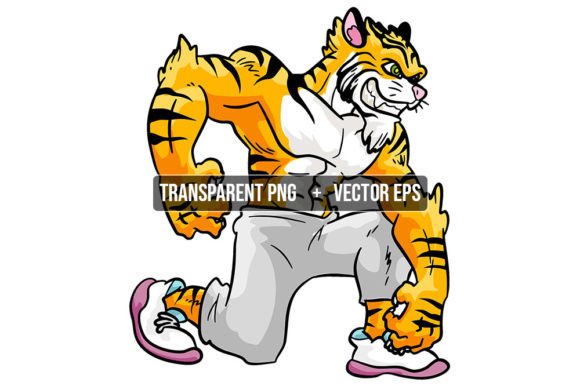
In the crowded landscape of digital assets, finding a visual that truly captures energy and professionalism can be challenging. The Tiger Animal Mascot vector illustration offers a distinct solution, blending the fierce majesty of the wild with a structured, athletic aesthetic. This isn't just a generic cartoon; it is a carefully crafted character designed to serve as the face of a brand, the centerpiece of a classroom project, or the highlight of a digital campaign. The package arrives ready for professional deployment, containing both a high-resolution 4-megapixel pre-rendered PNG for immediate use and a scalable EPS vector file for infinite customization.
Visual Style and Character Personality
The immediate appeal of this design lies in its "Muscular Athlete" interpretation. Rather than depicting a passive or overly cuddly feline, the artist has imbued the tiger with a sense of determination and capability. The anatomy is stylized yet grounded, suggesting strength through broad shoulders and a confident posture without resorting to caricature. This balance is crucial for modern brand identity work. You want a mascot that feels approachable enough for children—fitting perfectly into a Kindergarten or Junior school environment—yet strong enough to represent a sports team, a fitness brand, or a competitive startup.
From a design perspective, the line work and color saturation are optimized for versatility. The vector file (EPS) allows you to deconstruct the illustration. You can scale the Tiger Animal Mascot to billboard size without pixelation, or shrink it down for a favicon. The pre-rendered PNG is particularly useful for content creators who need a quick asset for social media graphics or blog headers. The visual hierarchy is clear: the tiger demands attention, making it an excellent focal point for any composition.
Strategic Applications for Marketers and Entrepreneurs
For the entrepreneur or small business owner, a mascot is a powerful tool for recognition. Think of how effective mascots are in packaging design. If you are launching a product aimed at a younger demographic or the education sector, this illustration bridges the gap between playful and professional. It works exceptionally well for Art Class materials, educational apps, or after-school programs. The "Athlete" aspect also makes it a prime candidate for local sports leagues, gym branding, or even a dynamic logo for a productivity app that wants to convey "hustle" and "strength."
Graphic designers will find the file structure accommodating for various workflows. Because the package includes the vector file, you can integrate the tiger into complex layouts in Adobe Illustrator or Affinity Designer. You might use the mascot as a full illustration on a t-shirt or isolate the head to create a circular logo mark. The versatility extends to editorial design; imagine a magazine spread about leadership or courage featuring this artwork to break up text-heavy pages. It serves as a visual anchor that guides the reader's eye.
Integrating the Mascot into Modern Typography Projects
A mascot rarely stands alone; it needs typographic support to communicate a message. When pairing fonts with the Tiger Animal Mascot, you need to consider the weight and energy of the illustration. Because the tiger is muscular and bold, it pairs well with heavy sans serif font families. Think of typefaces with strong geometric shapes and high x-heights. These fonts will stand up to the visual weight of the tiger without getting lost. Avoid thin, delicate script fonts for headlines, as the contrast might be too jarring, though a script font could work for a smaller accent word if the overall vibe is playful.
Conversely, if you are designing for a more traditional context—perhaps a university crest or a formal event brochure featuring the mascot—a sturdy serif font can add a touch of heritage and authority. The key is maintaining a consistent visual hierarchy. The mascot draws the eye, the headline font captures the main idea, and the body copy provides the details. Using a modern typography approach with clean spacing and ample white space will ensure the detailed illustration doesn't clutter your layout.
Practical Guidance for Design Assets and Licensing
When incorporating this asset into your library, treat it as a premium font or high-value asset. While the prompt mentions stickers and kids' projects, the commercial utility is vast. Before finalizing a design, test the mascot against your background colors. The high-contrast nature of a tiger usually requires a neutral or complementary background to pop. If you are using it for web design, ensure the PNG is optimized for fast loading times, or use the vector path for SVG implementation if your platform supports it.
For content creators and bloggers, this illustration can revitalize a tired content calendar. Use it to illustrate articles about competition, nature, or personal growth. It is a creative font asset (in the broader sense of design resource) that solves the problem of generic stock imagery. Whether you are creating a series of stickers for a messaging app or designing the cover of a children's book, the Tiger Animal Mascot provides a professional polish that elevates the final product. It is a versatile investment that adapts to the specific needs of the project, ensuring your work remains engaging and visually distinct.